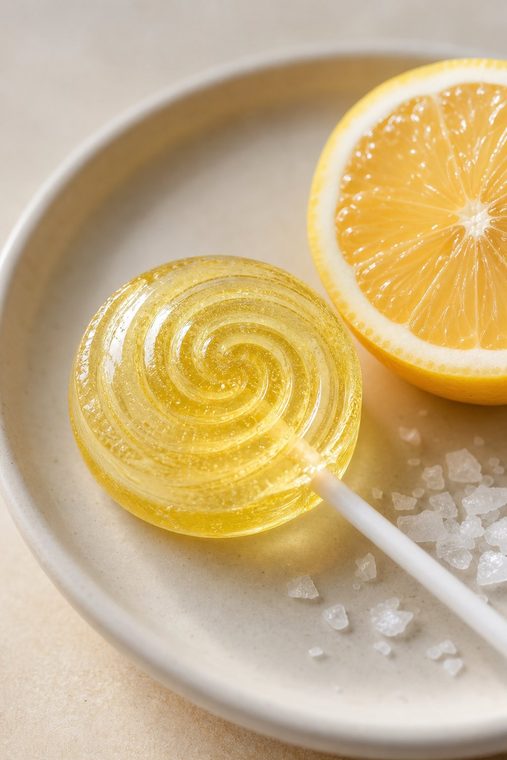
The long read
What makes a lollipop artisanal
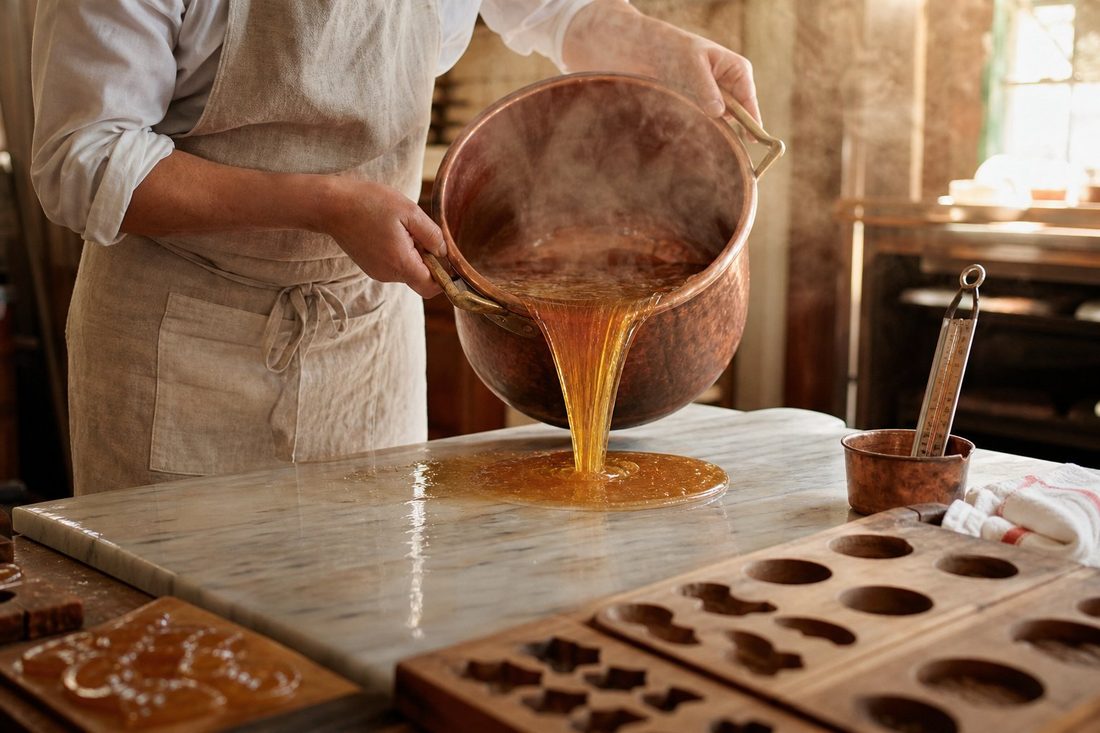
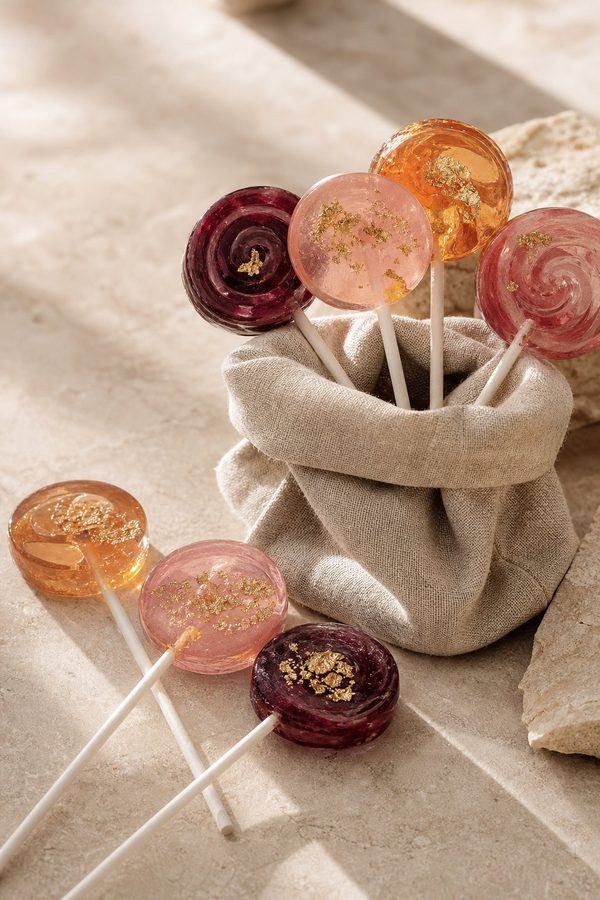
A lollipop is a temperature problem before it is a flavor problem. Sugar, glucose and water go into a copper kettle; the syrup climbs past 150 °C, loses its water, and becomes a glass that will set hard the moment it cools. Everything a candy maker cares about happens in the ninety seconds after that kettle comes off the heat: how fast the flavour goes in, how far the syrup is pulled, whether the swirl ends up even or lopsided.
Our kitchen makes four kilos at a time, which is small enough to stir by hand and small enough to throw a batch away when the thermometer drifts. That is the whole difference between a factory lollipop and this one — not romance, but batch size and attention.
Three layers of flavour
Every candy in the library is built the same way, in three deliberate layers.
- The base carries the bulk of the taste: fresh juice, a fruit purée, or an infusion steeped overnight and strained before cooking.
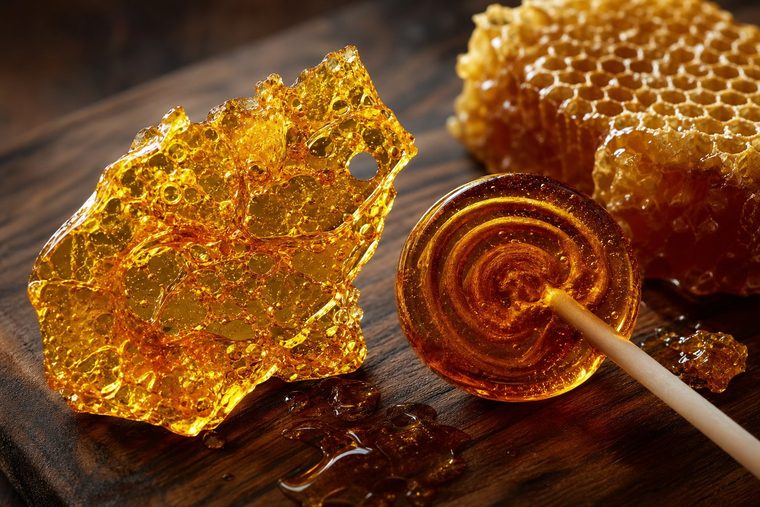
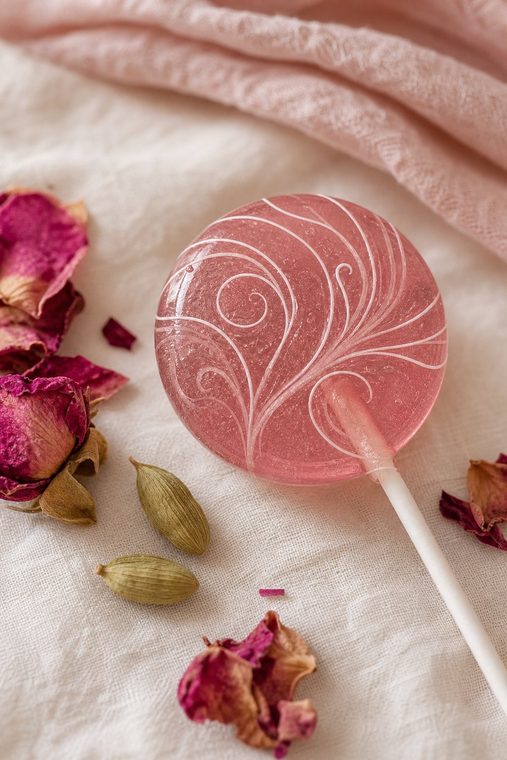
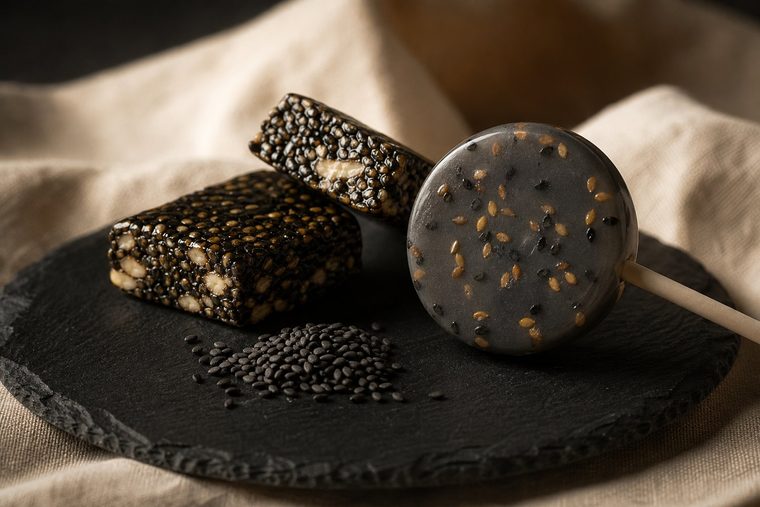
- The middle is texture and aroma — toasted seeds, cracked cardamom, honey cooked dark enough to taste like itself.
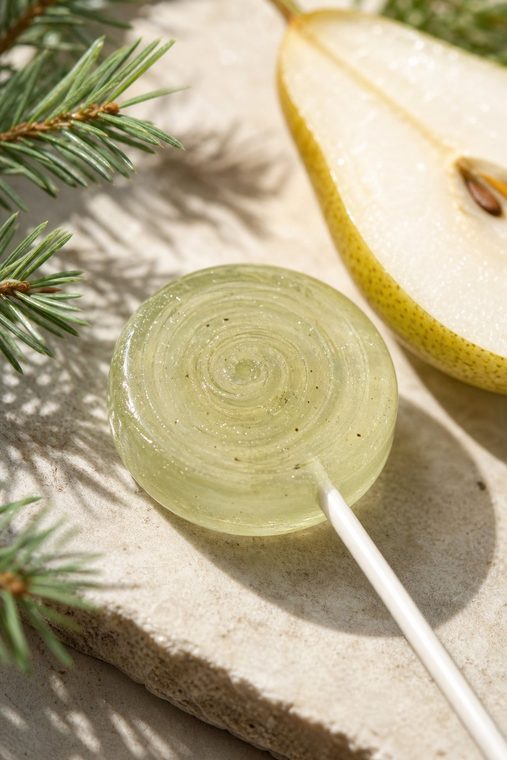
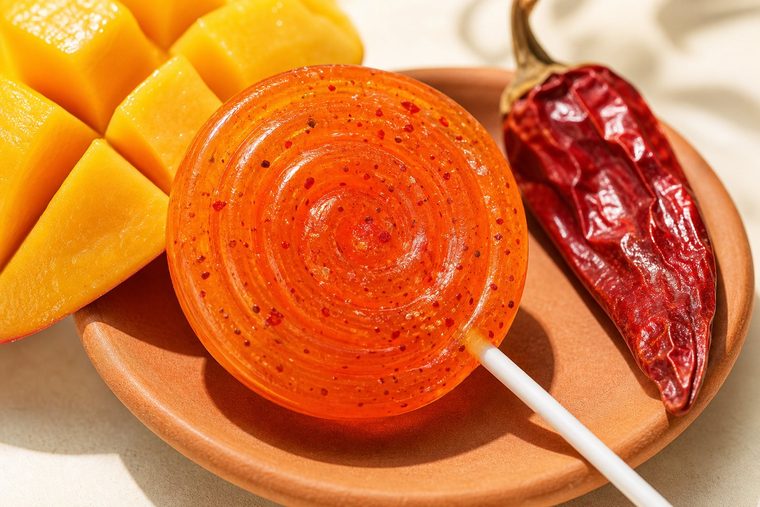
- The finish is the part you notice last and remember longest: flaked sea salt, a dust of mild chile, lime zest rubbed into the sugar while it is still warm.
Why the batch stays small
Above eight kilos, the syrup cools unevenly from the edges of the slab and the swirl stops being a design decision. Below four, there is not enough thermal mass to hold the working temperature and the candy seizes before it can be pulled. Four kilos fills roughly 160 lollipops or 40 six-piece boxes, which is why the flavor library rotates and why a box occasionally sells out for a week.
Colour that comes from the ingredients
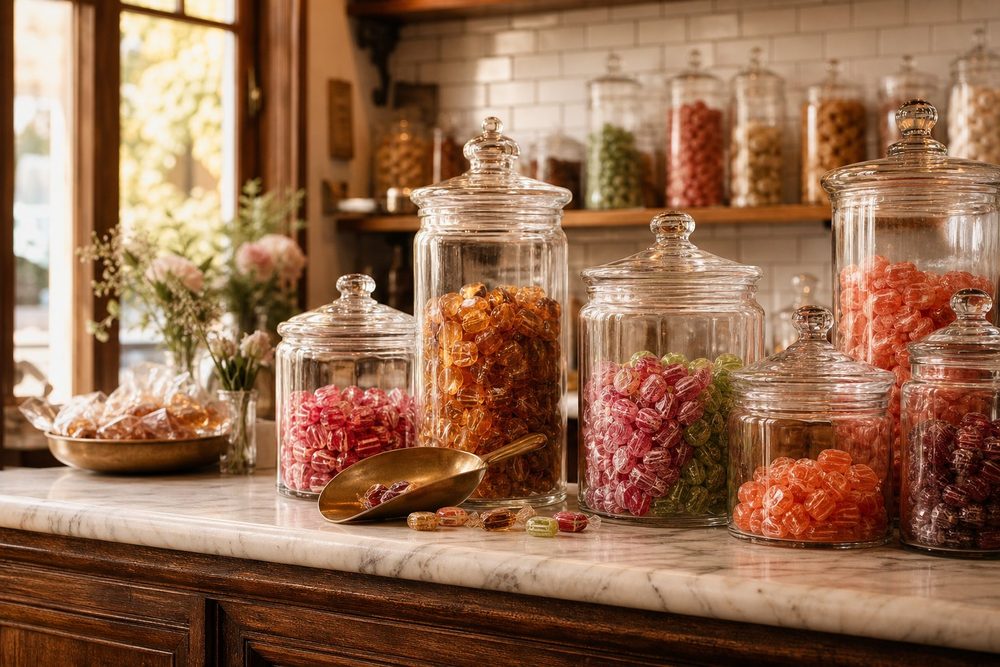
There are no certified artificial colours in any of our candies. The amber in the honeycomb comes from honey cooked past the point where it turns bitter. The blush in the cardamom rose comes from a beet-and-rose infusion. The charcoal grey in the sesame candy is the sesame itself. Colours will vary slightly between batches because fruit varies — that variation is the receipt for the claim.
If a flavor needs a colour to be recognised, it probably needs more of the ingredient instead. Marit Halloran, head confectioner
Curing, wrapping, and the 24-hour wait
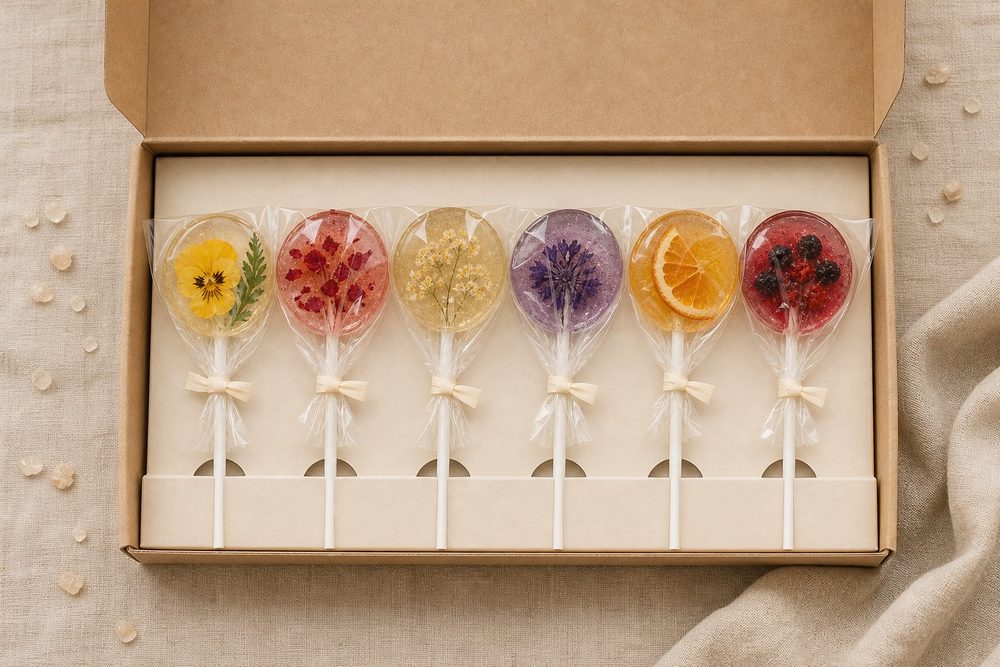
Finished lollipops cure for a day in a room held below 40% humidity. This is unglamorous and completely necessary: candy that goes straight into a bag will sweat, stick to its wrapper, and lose the snap that makes hard candy worth eating. Each piece is then wrapped in compostable cellophane with a paper twist tie and packed in a kraft box with a cream insert.
From kettle to shipping box, one batch takes about three days. Orders leave the kitchen on Tuesdays and Thursdays.